


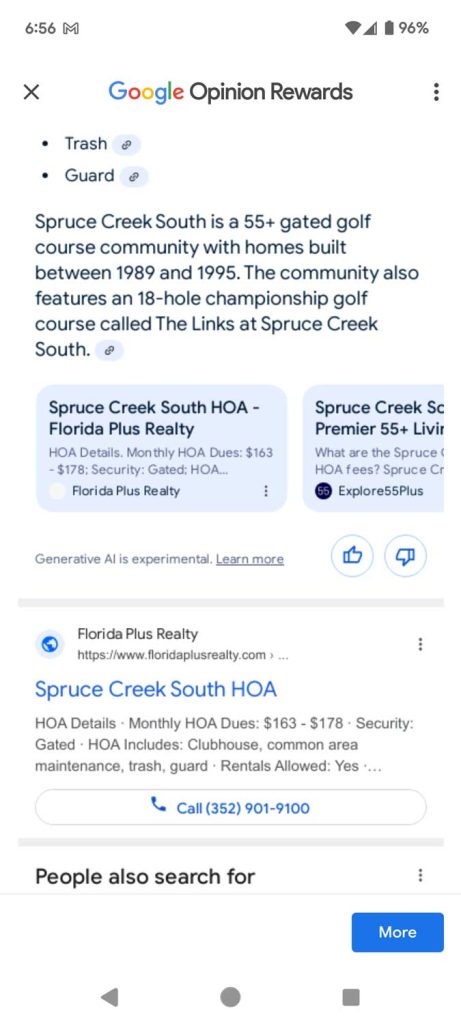
Google Opinion Rewards
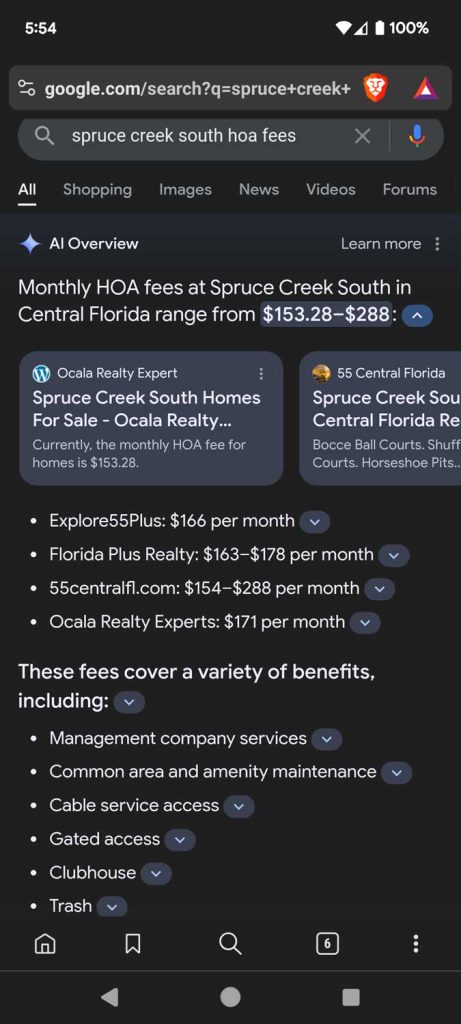
Google AI Result | Spruce Creek South Monthly HOA Fees
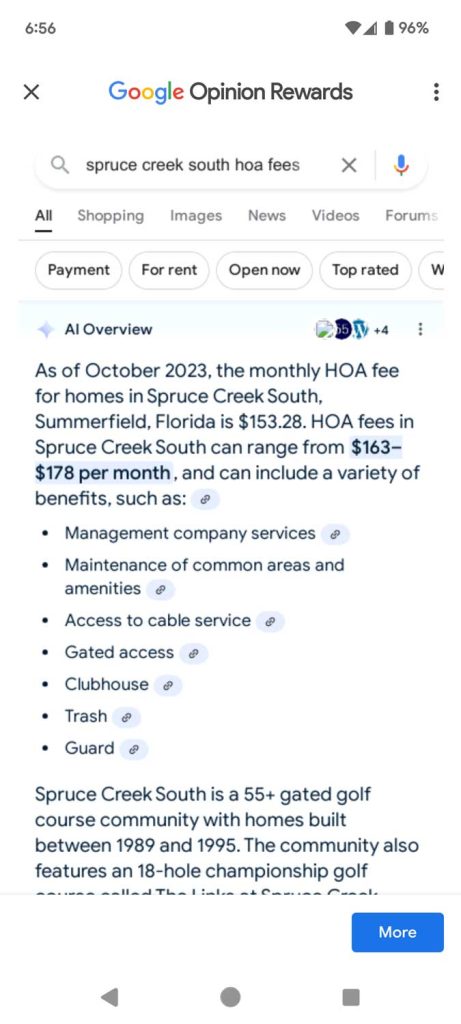
Google Opinion Rewards | Monthly HOA Fee
For-Profit, Private, Equity Investor-Owned Property
📝 Spruce Creek South | Collusion | Not A HOA! 📝
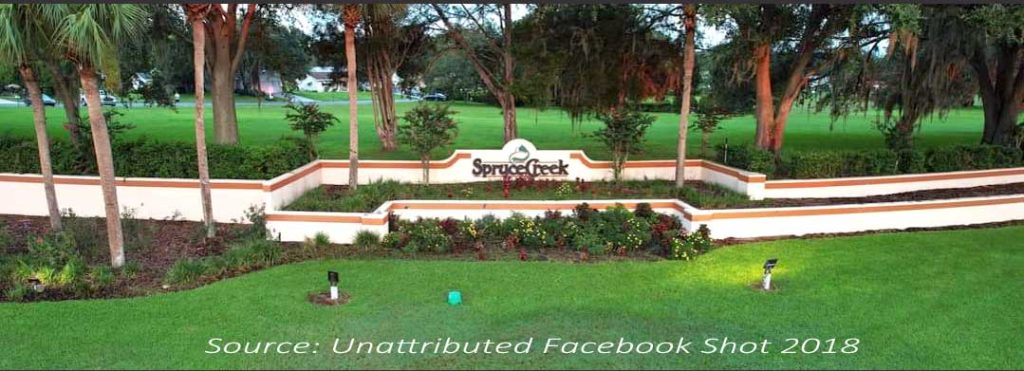
Spruce Creek South | Wall Sign | 2018
Spruce Creek South in Summerfield, Florida is marketed as a HOA, but is a private equity investor owned for-profit
55+ Senior gated community and is not owned or managed by a Home Owners Association (HOA).
Misleading… 👎
Deceived into the actual status of the Spruce Creek South in Summerfield Community having the maintenance fee referred to as the HOA monthly fee every time when inquiring to the recurring fees when purchasing a retirement residence in the community and have found that the practice continues and is just plainly wrong! Mortgages will not be approved without the illusion of the Spruce Creek South Community Real Estate Agents listing the properties as an HOA fee.
The Spruce Creek South gated retirement community is/was a For-Profit, Private, Equity Investor owned and managed by Kenneth Kirkpatrick, President and Owner of Heritage Management Corp. – Commercial/Residential Management Company. Equity Investor Kenneth Kirkpatrick is/was the Business Manager of NAI Heritage – Ocala, FL – Commercial Real Estate Services which is/was structured under NAI Global, layer after layer of companies where this man is literally making money from a senior community, myself included, shielding himself from any liability, as the common area structures go back go least possible maintenance, to the point that maintenance is done when it breaks.
Unlike a Homeowner’s Association (HOA) where property owners actually have a say in the management of the community, Equity Investor Kenneth Kirkpatrick, President and Owner of Heritage Management Corp. completely controls the Spruce Creek South Community Amenities and Common Areas.
Below is just one sample of a Spruce Creek South in Summerfield Community, MLS listings being filled out in a misleading way. Please check any other property within the sites linked that are being compensated to be misleading that the Spruce Creek South in Summerfield Community is an HOA but it is NOT a HOA!
For-Profit, Private, Equity Investor-Owned Property
📝 The Collusion of Illusionary HOA 📝
MLS Misinformation Propagation 👎
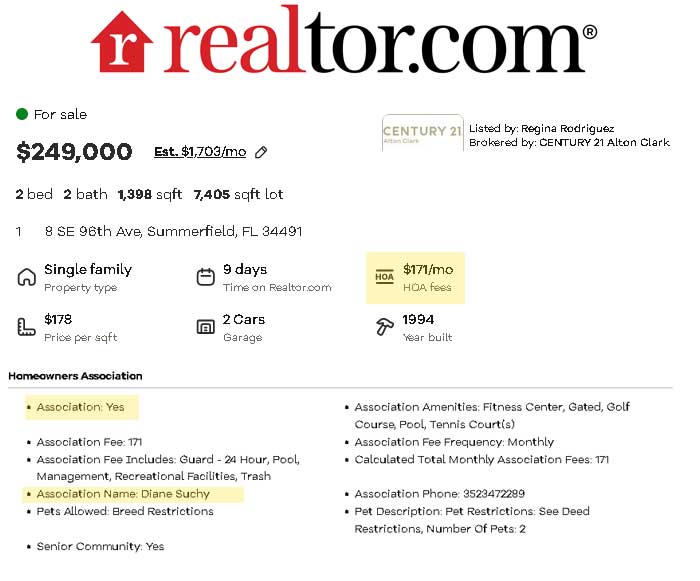
Realtor.com | Listing HOA Fees
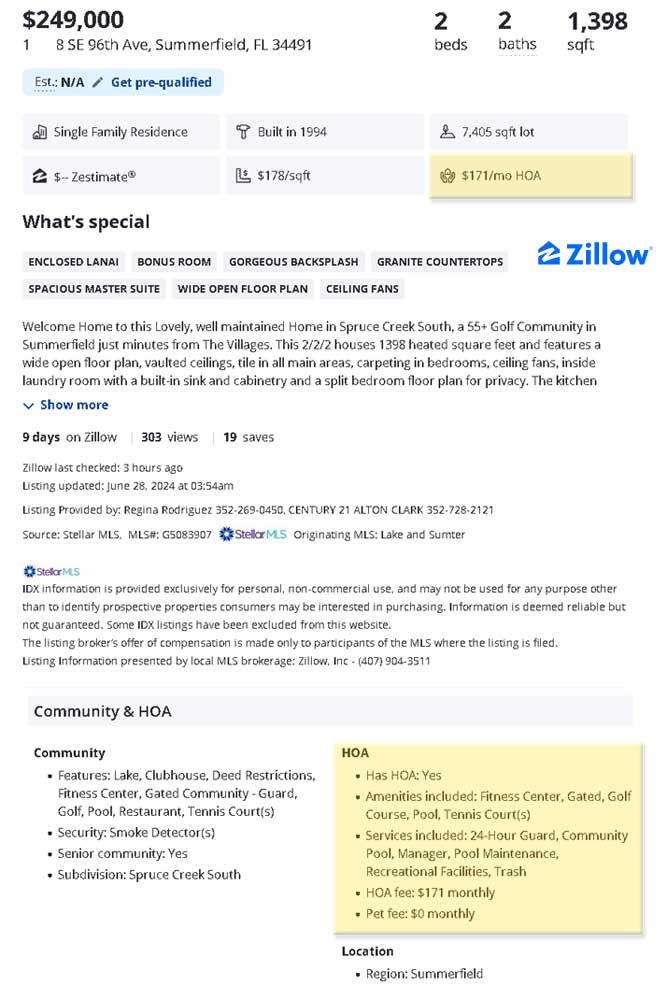
Zillow | Listing HOA Fee
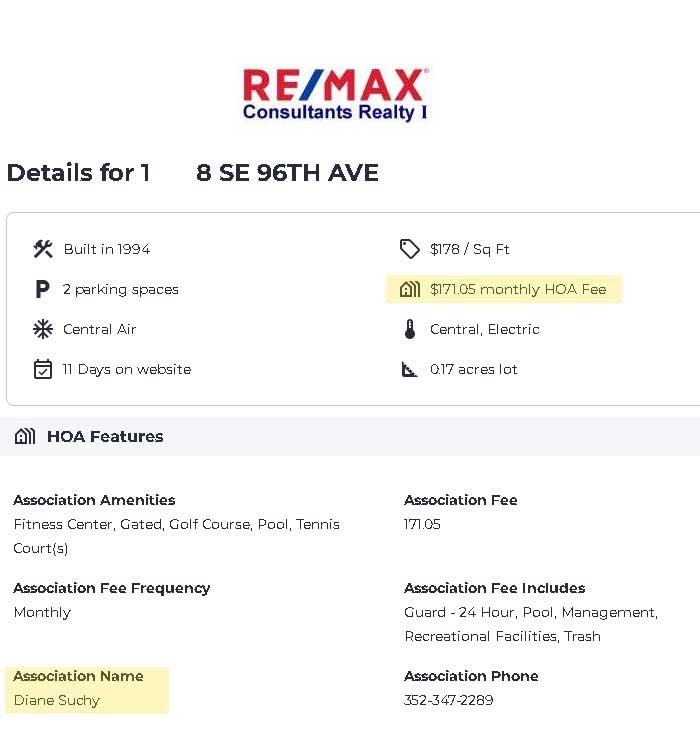
RE/MAX | Listing HOA Fee
Realtor.com | Zillow| Re/Max
All Spruce Creek South Realtor.com Listings
All Spruce Creek South Zillow Listings
All Spruce Creek South Re/Max Listings
Realtor Misinformation Propagation 👎
Do a Google Search of Spruce Creek South HOA Fees with results all claiming Spruce Creek South in Summerfield, Florida is governed by a Home Owners Association, again, the community “HOA Fees” are funneled directly to a For-Profit, Private, Equity Investor!
- Florida Plus Realty
26736 US Highway 27, #103
Leesburg, FL 34748
PH: 352-901-9100 - 55 Central Florida
- Fontana Realty
915 SE 17th Street
Ocala, FL 34471
PHILIP STEVENS Broker Associate
Cell: 352-362-3418
Phone: 352-362-3418
Email: [email protected]
For-Profit, Private, Equity Investor-Owned Property
🎥 Historical Videos… 🎥
Spruce Creek South Community | Brick City Photography | Posted: April 17, 2024
Spruce Creek South Community | Brick City Photography | Posted: May 11, 2020
Spruce Creek South | Brick City Photography | Posted: July 25, 2023
For-Profit, Private, Equity Investor-Owned Property
🏘️ Community Types 🏘️
🏚️ Private Equity Investor Owned For-Profit Community 🏚️
A private equity investor owner community can refer to different contexts, so let’s explore a few possibilities:
- Apartment Buildings, Developed Communities and Private Equity:
- In the context of real estate, private equity firms sometimes invest in apartment buildings, developed community common areas and other property investments. They buy these properties to generate profits by managing, cutting costs maximizing return on investment (ROI).
- However, this approach has faced criticism. Some tenants report negative experiences, such as rising rents and maintenance fees, reduced maintenance quality, and changes in management after private equity firms take over.
- Community Equity Investment:
- Community equity investment allows residents to buy shares in local commercial real estate. Unlike other community ownership models, it doesn’t require residents to live or work in the development.
- Residents become shareholders and can profit from the development of the property.
- Private Equity’s Impact on Communities:
- Private equity firms invest in businesses across the country, including small businesses in local communities. Their capital helps create jobs, keep businesses open, and contribute to economic growth.
- Community Ownership Models:
- Some models involve community ownership of real estate. For example:
- Community Land Trusts (CLTs): These divide ownership between a nonprofit entity (owning the land) and individuals (owning the buildings on the land).
- Real Estate Investment Trusts (REITs): Residents can become shareholders in the corporation that owns the property, allowing them to benefit from development.
🏡 Homeowners Association (HOA) 🏡
A Homeowners Association (HOA) is an organization that establishes and enforces rules for properties within a subdivision, planned community, or condominium building. Here are the key points about HOAs:
- Membership: When you purchase property within an HOA’s jurisdiction, you automatically become a member. Some communities require mandatory membership for property owners.
- Rules and Guidelines: HOAs create and oversee rules and guidelines for the community. These rules are typically outlined in a document called the Declaration of Covenants, Conditions, and Restrictions (CC&Rs). CC&Rs cover various aspects, including property maintenance, structural restrictions, and aesthetic choices (e.g., house paint color).
- Board of Directors: HOAs are run by a board of directors or governors, usually composed of community residents. The board enforces rules and oversees common area maintenance and facilities upkeep.
- Fees: HOA members pay monthly or annual fees (HOA fees) to cover operating expenses, amenities, and maintenance. Fees can vary based on property type, location, and amenities offered.
- Penalties: HOAs may impose fines on noncompliant homeowners, ranging from fees to legal action.
In summary, HOAs help maintain community standards and manage shared resources, but they come with both advantages and responsibilities for homeowners. If you’re considering buying a home in an HOA, it’s essential to understand its rules and financial implications.
🏠 Property Owners Association (POA) 🏠
A Property Owners Association (POA) is an organization that manages and governs a community or residential area. Here are the key points:
- Definition: A POA is comprised of property owners within a specific region. Residents (usually property owners) elect a board of directors to establish and uphold rules and regulations in the community.
- Scope: POAs can vary in size and scope: They might oversee a specific district, several communities, or even an entire city. POAs can exist in urban or rural settings, including planned communities, neighborhoods, and commercial properties.
- Responsibilities: POAs handle various tasks, such as: Setting Rules: They establish regulations related to architectural guidelines, maintenance standards, and noise restrictions. Common Area Maintenance: POAs maintain shared spaces like parks, playgrounds, and swimming pools. Quality Control: Their goal is to maintain the overall quality of the community, which can positively impact property values.
- Pros and Cons: Upside: POAs help keep property values high, benefiting homeowners during resale. Downside: Their rules can be restrictive, covering aspects like home colors, parking, and pet ownership. POAs also come with fees and potential fines for rule violations.
Last Revision: May 8, 2026